FGEF
Forward Genomics Education Foundation
FGEF
Africa holds the world's greatest genetic diversity yet contributes fewer than 3% of global genomic study participants. Your gift changes that, one secondary school student at a time.
Help us reach 6,750 students by 2029
Starting in secondary school, where it matters most.
Genomics and bioinformatics are driving the future of medicine and human health, yet most of Africa's brightest young minds don't even know the door exists. We change that, one school visit at a time.
Africa harbors the world's greatest human genetic diversity, yet contributes the smallest share of global genomic knowledge.
Affiliated Institutions & Partners
Africa's underrepresentation in global genomics isn't a graduate school problem. It starts in secondary school, where no one ever showed students that this science belongs to them too.
Reach, Research, and Reform, our three-pillar strategy to transform genomics education across Nigeria and Africa.
Interactive genomics discovery sessions to SS2 and SS3 students across Ibadan, with a multidisciplinary One Health team of African health professionals.
Rigorous mixed-methods programme evaluation generating the first empirical evidence base for pre-college genomics outreach in West Africa, published openly.
Engaging NERDC and the Oyo State Ministry of Education to formally include genomics and One Health concepts in Nigeria's secondary school curriculum.
"The student sitting in a secondary school classroom today holds the answer to a genomic question that has not yet been asked. Our work is to make sure that student finds their way to the question."Adedamola Arowolo, DVM · Founder, FGEF
Help us reach 6,750 Nigerian students with world-class genomics education by 2029. Your contribution directly funds school visits, mentorship, and open-access research.
FGEF exists because Africa's genetic future should be written by African scientists, and that story starts at secondary school.
To advance genomics science education through pre-college outreach in Nigeria and across Africa, building a generation of African scientists who are equitably represented in global genomic research and equipped to solve the health challenges of their own communities.
The most powerful intervention in the shortfall of Africa's genomics representation starts at secondary education. It is at the moment a fifteen-year-old student in Ibadan, Nigeria decides whether science is for someone like them. We intervene at that moment, deliberately and at scale.
An Africa in which every young person, regardless of gender, geography, or socioeconomic background, has the opportunity to discover and pursue a career in genomics and bioinformatics, and in which African scientists lead the global research agenda on the diseases and environmental challenges that most affect African populations.
These are not aspirations, they are embedded in every programme, every hire, and every partnership decision.
"Africa contributes fewer than 3% of participants in global genomic studies despite harbouring the world's greatest human genetic diversity. This is a pipeline and a data problem, and the pipeline problem begins long before graduate school."The Foundation of FGEF
Eight strategic objectives across three pillars, designed to transform genomics education in Nigeria and replicate across Africa by 2030.
Interactive genomics and bioinformatics discovery sessions for SS2 and SS3 students across all five Ibadan LGAs. Target: 10 schools in Year 1, 15 in Year 2, 20 in Year 3, reaching 4,500–6,750 students across 45 schools by end of 2029.
Recruit, train, and deploy 6–10 African health professionals annually, from medicine, veterinary science, pharmacy, medical laboratory science, and bioinformatics. Every student meets scientists from at least three disciplines in a single session.
A digital mentorship community connecting programme alumni with genomics professionals across Nigeria and Africa, bimonthly scientist Q&A sessions, curated bioinformatics learning pathways, and university open day notifications.
Rigorous mixed-methods evaluation using pre/post knowledge surveys, career interest assessments, focus groups, and 3- and 12-month longitudinal follow-up. Generating the first empirical evidence base for pre-college genomics outreach in West Africa.
All programme research published in open-access peer-reviewed journals. All curriculum materials, evaluation instruments, and documentation released under open-source licences, permanently and freely available for adaptation and replication.
Advocating for the formal inclusion of genomics, bioinformatics, and One Health concepts in Nigeria's secondary school science curriculum. Engaging the Oyo State Ministry of Education and NERDC with evidence from our programme evaluation.
Open-source the full program model. Partner with institutions in other Nigerian states. Begin cross-country conversations with Ghana and Cameroon.
Launch outreach in 10 secondary schools across Ibadan. Build and train the first One Health facilitation team. Begin pre/post data collection for research evaluation.
Expand to 15 schools. Launch digital mentorship community. Begin 12-month longitudinal follow-up with Year 1 cohort. First open-access publication.
Reach 20 schools and 4,500+ cumulative students. Submit formal curriculum integration proposals to Oyo State MoE and NERDC backed by two years of evidence.
Open-source the full programme model. Partner with institutions in other Nigerian states. Begin cross-country conversations with Ghana and Cameroon.
We treat our programme as a research study. Every outreach visit generates data. Every finding is published openly. We will not scale what we cannot prove works.
To our knowledge, no peer-reviewed literature documents pre-college genomics education outreach in West Africa. FGEF exists to fill that gap. Our program is both an intervention and a study, generating empirical evidence base to guide the field.
Our research tests a hypothesis: that exposing students to real scientists from multiple health disciplines simultaneously increases science identity formation more effectively than single-discipline exposure.
Medical doctors explain how genomics drives diagnosis, drug discovery, and precision medicine for diseases prevalent in Nigeria, from malaria to sickle cell disease.
Veterinarians show how animal genomics connects to human epidemics, from Lassa fever to COVID-19, demonstrating the One Health principle in lived Nigerian reality.
Bioinformaticians demonstrate that genomics is a coding and data science field, opening the door for students who love mathematics and technology, not just biology.
Environmental scientists show how genomics tracks climate change, biodiversity loss, and ecosystem disruption, completing the One Health triad of human, animal, and environmental interconnection.
"Africa's science education sector deserves the same rigour applied to its own development. We will not scale what we cannot prove works."FGEF Research Commitment
A team of African scientists, educators, and advocates committed to building Africa's genomics generation from the ground up.
The Forward Genomics Education Foundation grew out of a recognition that the global genomics equity problem is, fundamentally, an education pipeline problem, and that pipeline begins long before graduate school.
When we began working in genomic research, the question was always the same: why are African scientists so underrepresented? The answer, on examination, was not a lack of talent. It was a lack of exposure, a missing introduction, at a young age, to a field that had never been shown to African pre-college students.
FGEF was founded to make that introduction, systematically, at scale, and with the rigour of a research programme, not the spontaneity of a single workshop.
Meet the team driving genomics education across Africa.
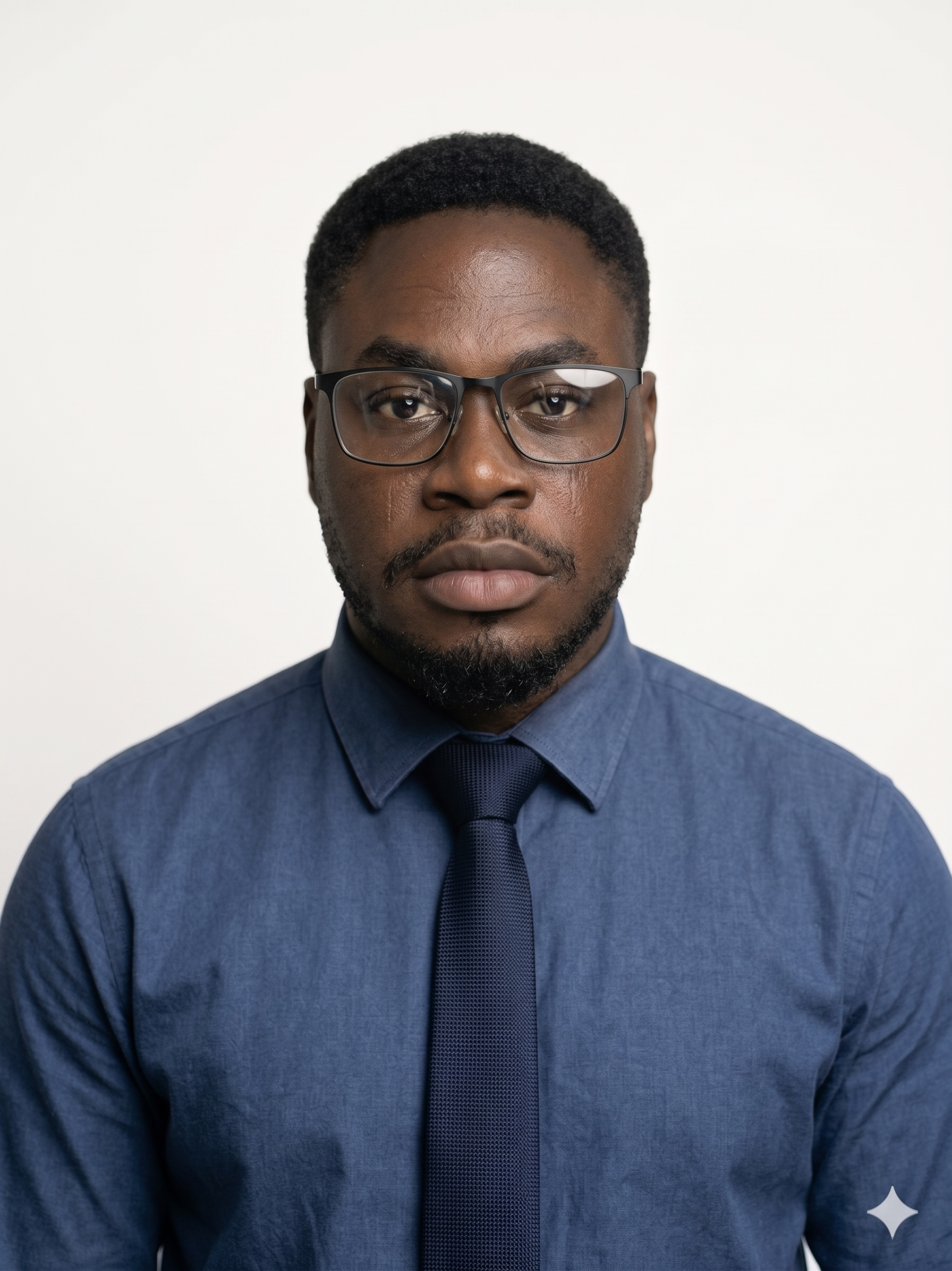



Every facilitator is an African scientist. Students see people they can become, professionals from institutions they know, solving problems they recognize.
Clinicians from UCH Ibadan explaining how genomics is already driving diagnosis and treatment for Nigerian patients, making the science immediate and relevant.
Connecting animal and human health through genomics, showing students that One Health is a scientific method, not a metaphor.
Demonstrating how pharmacogenomics is reshaping drug development and why Africa's genetic diversity must be part of that story.
Translating bench-level genomic work into language that fires the imagination of secondary school students.
Showing that genomics is also a coding field, reaching students whose first love is mathematics and programming.
Curriculum designers who build and evaluate every workshop, ensuring methods are evidence-based and student-centred.
Your donation directly enables school visits, mentorship programmes, and open-access research.